
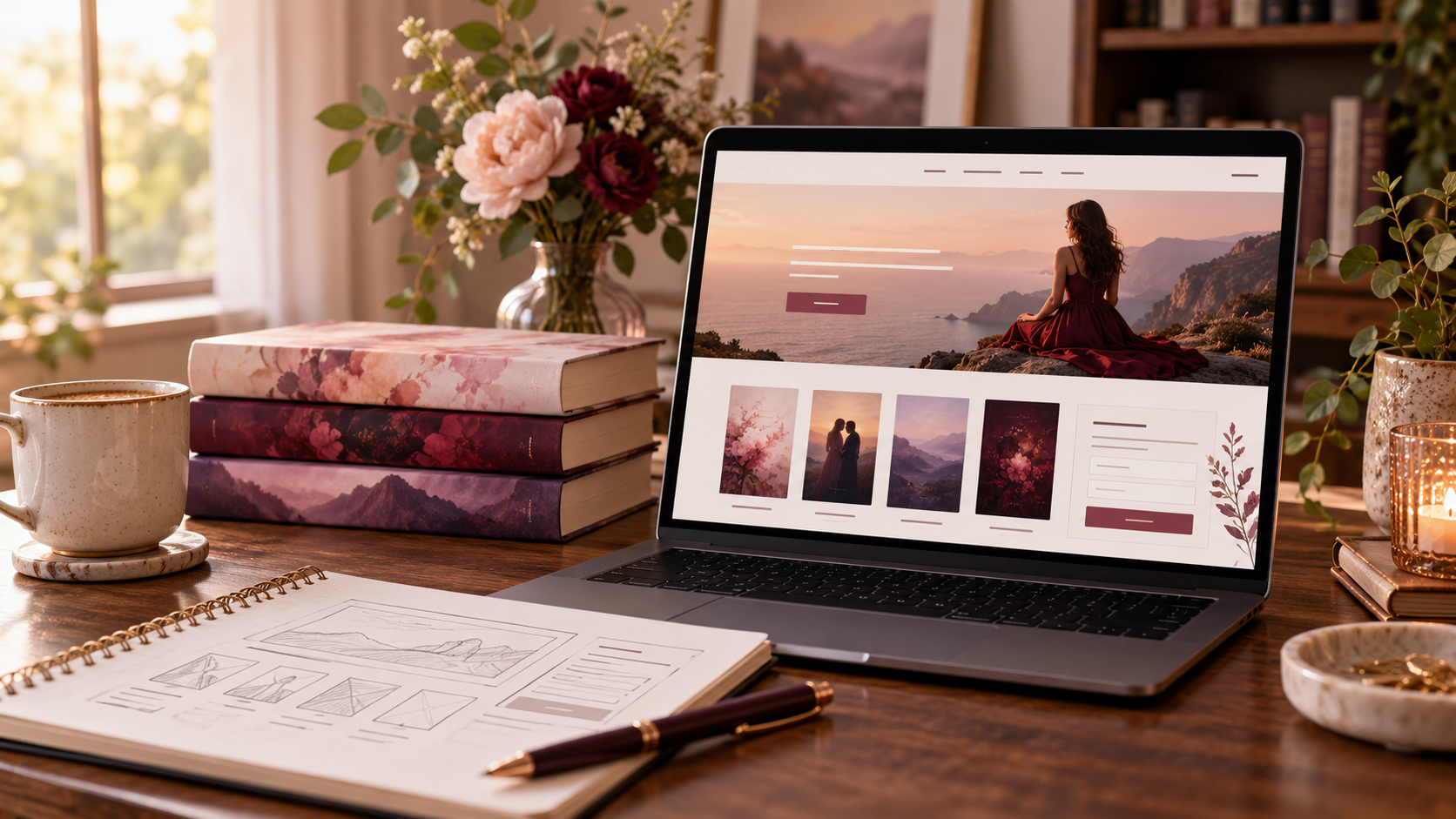
If you're building your first author website, it's remarkably easy to convince yourself you need everything.
A blog. A shop. Character art. Seventeen links to seventeen retailers. An interactive map of the fictional town where your grumpy small-town sheriff keeps falling inconveniently in love.
Some of those things might be fantastic. But they aren't where you need to start.
So, what should an author website include? At its core, a romance author website needs seven things: a strong homepage, an organized book catalog, an email signup, an engaging About page, a clear Contact page, an area for news or useful content, and a mobile-friendly design.
Everything else should support one of those pieces—or help move a reader from ‘Who is this author?’ to ‘I need her entire backlist immediately.’
Here's how to build a website around that journey.
Why Does a Romance Author Need a Website?
Instagram isn't your website.
Neither is TikTok, Facebook, BookTok, Goodreads, or your Amazon author page.
Those platforms can be incredibly useful for finding readers, but you're building your presence on someone else's property. Algorithms change. Features disappear. Accounts get suspended. A platform that sends you hundreds of readers today may send you twelve next year.
Your website gives your author brand a permanent home.
More importantly, it gives all those other marketing channels somewhere to lead.
Someone discovers your book on TikTok. She Googles your name. She lands on your website. She realizes the book is actually part of a six-book series. She downloads the prequel novella in exchange for her email address.
Now you've turned a social-media discovery into a reader relationship you can continue nurturing.
That's the job of your author website.
It isn't simply an online business card. It's the hub connecting your books, brand, newsletter, marketing, and readers.
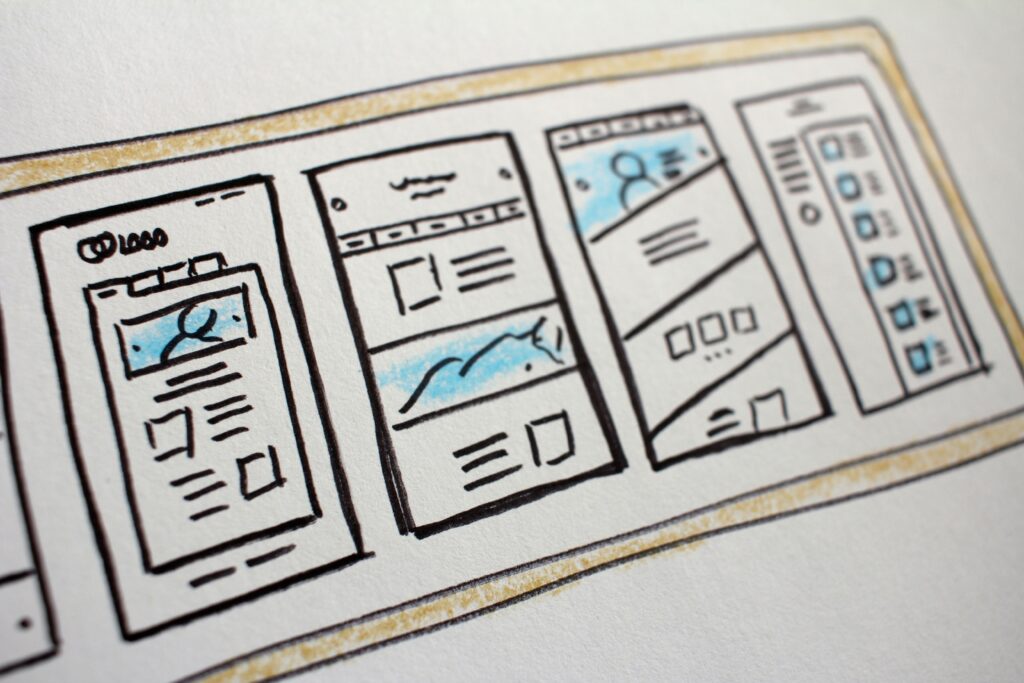
What Should an Author Website Include? The 7 Essentials
You can build an enormous author website eventually.
You don't need to start there.
If you're launching your first site—or trying to figure out why your existing one isn't doing much for you—focus on these seven pieces an author website should include first.
1. A Homepage That Immediately Tells Readers What You Write
Your homepage needs to answer a few questions very quickly:
- Who are you?
- What kind of books do you write?
- What should I read first?
- What should I do next?
That doesn't mean covering every pixel above the fold with information.
It means establishing your author brand immediately.
If you write cozy small-town romances full of cinnamon rolls and emotionally constipated cowboys, your website shouldn't feel like a gothic romantasy.
If you write dark romance, your website probably shouldn't look like a wedding planner's.
Your colors, typography, photography, imagery, copy, and book covers work together to set expectations before a visitor reads a single synopsis.
Then give that visitor somewhere obvious to go.
Feature your newest release, your most important series, or a clear "Start Here" book. Include a prominent newsletter signup or reader magnet.
Your homepage isn't supposed to contain your entire career.
It's supposed to open the door.
2. A Book Catalog Readers Can Actually Navigate
Romance readers are wonderfully capable of inhaling a backlist.
Help them do it.
A Books page should display your titles clearly and make it easy to understand how they relate to one another.
For authors with only one or two books, that can be simple.
Once you've published multiple series, things get more interesting.
Consider organizing your catalog by:
- Series
- Reading order
- Subgenre
- Trope
- Heat level
- Standalone versus interconnected books
Each individual book should have enough information to help a reader decide whether it's for them.
That might include the cover, title, blurb, series position, tropes, heat level, content information, formats, and retailer or purchase links.
If Book Four technically stands alone but spoils the couple from Book Two, tell your readers.
They will love you for it.
Give Every Series Its Own Home
Prolific authors should strongly consider dedicated series pages.
A series page can establish the world, display the books in order, answer reading-order questions, and send readers directly to the next book.
That's particularly useful for interconnected standalones.
Don't make a reader conduct a forensic investigation across Amazon, Goodreads, and Instagram to figure out whether The Grumpy Firefighter's Accidental Fiancée comes before or after The Cowboy's Secret Baby Christmas.
Tell her.
3. An Email Signup—and a Reason to Use It
Your newsletter signup shouldn't live only in the footer where it quietly gathers dust.
Give readers a reason to subscribe.
Romance authors have fantastic options for reader magnets:
- Bonus epilogues
- Deleted scenes
- Prequel novellas
- Extended spicy scenes
- Alternate POV chapters
- Character interviews
- Exclusive short stories
- Series reading guides
The best incentive feels like more of something the reader already loves.
If someone has just finished falling for your fictional couple, "Sign up for updates" isn't nearly as compelling as "Get their bonus honeymoon epilogue."
Place signup opportunities where they make contextual sense: your homepage, book and series pages, blog posts, and dedicated newsletter page are all possibilities.
Your website attracts the visitor.
Your newsletter gives you a way to continue the relationship after she leaves.
4. An About Page That Sounds Like a Human Being Wrote It
You don't need to open with:
"Jane Doe has been writing stories since she could hold a pencil."
Unless that's genuinely central to your story, readers probably care more about the person behind the books they're enjoying now.
Your About page can absolutely establish professional credibility, but romance readers also respond to personality.
Tell them what you write and why you love it.
Tell them you're incapable of writing a hero under forty.
Tell them about the ridiculous amount of coffee required to produce one happily-ever-after.
Tell them you write monster romance from a suspiciously cheerful home office full of houseplants.
The exact details will depend on your author brand.
The goal is connection.
Include a professional author photo, a concise biography for readers, and—if relevant—a separate press bio that bloggers, podcasters, event organizers, and journalists can easily use.
5. A Contact Page With Actual Instructions
"Contact Me" followed by a blank form isn't particularly helpful.
Tell visitors what they can contact you about.
Depending on your career, that could include:
- Reader messages
- Media interviews
- Podcast appearances
- Book events
- Speaking engagements
- Rights inquiries
- ARC or review questions
- Book club visits
If certain requests should go to an agent, assistant, publicist, or other representative, say so.
And unless you desperately want the world's spambots to become your new pen pals, a properly configured form is often preferable to plastering your email address everywhere.
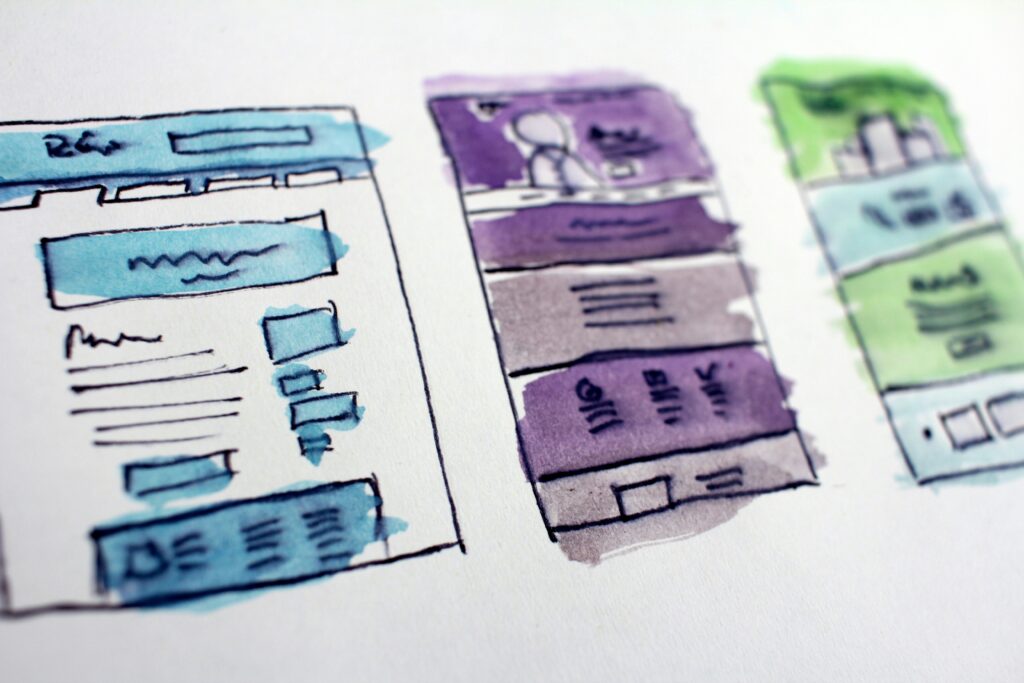
6. A Blog, News Section, or Other Fresh Content
Do authors absolutely have to blog?
No.
I'd rather see you maintain five excellent core pages than abandon a blog after three posts titled "Sorry I Haven't Blogged Lately."
But useful content can give your website additional ways to appear in search results and give readers more reasons to explore.
The key is having a strategy.
Depending on your author brand, that content might include:
- New-release announcements
- Cover reveals
- Reading-order guides
- Behind-the-scenes research
- Character features
- Book recommendations
- Bonus content
- Event recaps
- Genre-related articles
You don't need to become a full-time blogger.
Your content should support your books and author business—not become another job preventing you from writing them.
7. A Mobile-Friendly, Accessible Website
Your beautiful desktop design isn't enough.
Your website needs to work on smaller screens without forcing visitors to pinch, zoom, squint, or accidentally click three different things with one thumb.
That means paying attention to readable font sizes, button sizes, navigation, image sizing, spacing, forms, and page speed.
Accessibility belongs in this conversation too.
Use sufficient color contrast. Add useful alternative text to meaningful images. Create logical heading structures. Make links understandable. Don't hide important information inside images.
A beautiful website that some readers can't comfortably use isn't finished.
What Should an Author Website Include to Convert Romance Readers?
Once you've built those seven essentials, you can start thinking beyond What pages do I need? and ask a better question:
What information helps my particular readers find their next book?
This is where a generic author website and a thoughtfully designed romance author website separate.
Romance readers often shop by emotional promise.
They know the experiences they like.
Give them tools to find those experiences.
Use Tropes as Navigation
Enemies to lovers.
Age gap.
Second chance.
Only one bed.
Forced proximity.
Why choose.
Your tropes aren't just marketing copy. Once your backlist is large enough, they can become useful information architecture.
Imagine a reader finishes one of your books because she loved the age-gap dynamic.
Instead of making her browse fifteen unrelated books, give her a way to find your other age-gap romances.
You've just turned a trope into a discovery tool.
Make Heat Levels Clear
If heat varies significantly across your books, consider establishing a consistent heat-level system.
Don't assume "steamy" means the same thing to everyone.
A playful branded scale can work beautifully, but explain what each level actually represents.
Readers aren't asking for this information because they're prudish.
They're trying to choose the experience they want.
Use Content Notes Thoughtfully
If you provide content or trigger information, make it easy to find without forcing every visitor to read potential spoilers.
A dedicated content-notes page linked from each book page can work well.
Let Your Subgenre Influence Your Design
Your author website should feel related to your books without becoming a literal recreation of your covers.
A historical romance author might use elegant serif typography and restrained ornamental details.
A contemporary rom-com author might lean into playful typography, brighter colors, and energetic graphic elements.
A paranormal romance author might use deeper colors, atmospheric textures, and more dramatic imagery.
A dark romance author can create tension and sensuality without making the website so dark, tiny, or visually chaotic that nobody can read it.
Genre branding isn't about decorating your website with roses because you write romance.
It's about communicating the emotional experience readers can expect from your books.

Can an Author Website Actually Make Money?
Yes—but that doesn't necessarily mean your website itself needs to function as a store.
Think about revenue paths instead.
A reader could:
Website → retailer → book purchase
Or:
Website → newsletter → launch email → book purchase
Or:
Website → reader magnet → automated welcome sequence → series purchase
Or, with direct sales:
Website → store → purchase
The website supports the journey even when the final transaction happens somewhere else.
Direct Book Sales
Selling directly can give authors greater control over the purchasing experience and customer relationship, but ecommerce also adds complexity.
You'll need to think about payments, taxes, fulfillment, customer service, security, privacy, and—if you're selling physical books—shipping.
Don't add a store simply because another author has one.
Add one when direct sales make sense for your business.
Special Editions and Merchandise
An established readership may also support signed books, special editions, merchandise, bundles, or limited releases.
Those products need particularly clear product photography, descriptions, shipping information, policies, and checkout experiences.
Memberships and Exclusive Content
Some authors monetize superfans through memberships, Patreon-style communities, paid newsletters, or exclusive content.
Your website can serve as the central information hub even when the membership itself lives on another platform.
The important distinction is this:
Your website doesn't create an author income by existing.
It supports the systems that create revenue—discoverability, book sales, email marketing, launches, direct sales, and long-term reader relationships.
How Should a Romance Author Website Be Organized?
Start with the reader journey rather than the sitemap.
A first-time visitor might follow:
Homepage → Featured Book → Series → Newsletter
An existing reader might follow:
Homepage → Books → Series → Next Book
A superfan might follow:
Newsletter → Bonus Content → Store → Special Edition
Your navigation needs to support those paths without becoming a junk drawer.
For many authors, a main navigation could be as simple as:
Home | Books | About | Blog/News | Contact
Then add Shop, Bonus Content, For Readers, or similar destinations when your business actually needs them.
You don't need twelve top-level menu items.
WordPress vs. Squarespace vs. Wix for Romance Authors
There isn't a universally "best" platform.
There is a best fit for what you're trying to build.
WordPress
WordPress is particularly useful when you want significant control and expect your website to grow.
It can support large book catalogs, custom layouts, blogging, SEO tools, ecommerce, advanced forms, integrations, and highly customized reader experiences.
The tradeoff is complexity.
The more freedom you have, the more decisions—and maintenance—you inherit.
Squarespace
Squarespace can work well for authors who prioritize an attractive, relatively straightforward website and want an integrated visual builder.
It's particularly appealing when you want to DIY without managing as much of the technical WordPress ecosystem.
You trade some flexibility for simplicity.
Wix
Wix also offers a visual, hosted website-building experience and can handle ecommerce and other business features.
Like Squarespace, it can be approachable for DIY users who don't want to manage a traditional WordPress installation.
Before choosing any platform, ask:
What does my website need to do two years from now?
Not just:
Which template looks prettiest today?
Changing platforms later is possible.
It is also considerably less fun than writing kissing scenes.

How to Create an Author Website: A Simple Launch Plan
If you're starting from zero, don't try to build the ultimate version of your author empire in one weekend.
- Choose and register your domain. Your author or pen name is usually the simplest place to start.
- Choose your website platform and hosting setup. Base this on your technical comfort, budget, and long-term requirements.
- Establish your visual brand. Define typography, colors, imagery, and the emotional tone your site should communicate.
- Build the essential pages first. Start with Home, Books, About, and Contact, plus your newsletter integration.
- Organize your books around readers. Clearly identify series, reading order, tropes, heat levels, and purchase options where relevant.
- Test the website on actual devices. Check phones, tablets, and desktop screens. Test every form, button, and purchase link.
- Launch, measure, and improve. Your website isn't a book. You don't have to type THE END and never touch it again.
Add more sophisticated functionality when your author business gives you a reason to.
So, What Should an Author Website Include?
A strong romance author website doesn't need every feature you can possibly dream up.
It needs to understand what readers came looking for.
Start with the seven essentials: a strong homepage, an organized book catalog, an email signup, an engaging About page, a clear Contact page, useful or current content, and a mobile-friendly design.
Then build outward based on your books, your readers, and your author business.
Add trope navigation when your backlist needs it. Add dedicated series pages when readers need help navigating interconnected books. Add direct sales when selling directly makes sense. Add bonus content, character galleries, interactive maps, shops, memberships, quizzes, and elaborate animations when they serve an actual purpose.
Your website isn't successful because it has the most stuff.
It's successful when a new reader can arrive, understand exactly what you write, discover a book that excites her, and know exactly where to go next.
That's the home your books—and your readers—actually need.
Here’s a CTA that fits the Katherine Magpie voice and feels like a natural conclusion rather than a generic agency pitch:
Ready for an Author Website That Feels Like Your Books?
Your website should do more than prove you exist on the internet. It should feel unmistakably you—from the first glance at your homepage to the moment a reader finds their next favorite book.
Katherine Magpie Design creates custom WordPress websites for romance authors, combining thoughtful design, reader-friendly strategy, and your unique author brand into an online home built around your books and the readers who love them.
Whether you're building your first author website or you've finally outgrown the one you DIYed three book launches ago, I'd love to help you create something that looks beautiful, works beautifully, and gives your readers somewhere worth staying.
Ready to build your author website? Get in touch with Katherine Magpie Design.
Frequently Asked Questions
What should an author website include?
At minimum, an author website should include a homepage that establishes your brand, organized book and series information, an email signup, an About page, contact information, useful or current content, and a mobile-friendly design. Romance authors can build on those essentials with trope filters, heat levels, reading orders, reader magnets, content notes, and other genre-specific features.
What are five important things every romance author website should have?
If you need to strip your website down to the essentials, prioritize a clear homepage, organized book pages, an email signup, an About page, and an easy way to contact you. Make sure all five work well on mobile devices.
What are the essential elements of romance that should influence an author website?
Romance promises an emotionally satisfying romantic relationship, and genre and subgenre conventions help readers understand what kind of experience they're choosing. Your website can reinforce that promise through imagery, typography, color, tropes, heat-level information, book descriptions, and series organization without trying to literally illustrate the genre.
Can I see examples of successful romance author websites?
Absolutely—and don't look only at whether they're pretty. When evaluating another author's website, pay attention to how quickly you can identify what they write, find their books, understand reading order, subscribe to their newsletter, and locate the next action. Those are much more useful benchmarks than whether you happen to like their font.